The Hidden Cost of 'Almost Reliable' Data Pipelines
Silent failures are more dangerous than obvious ones. Here's how 'good enough' data infrastructure is quietly eroding your competitive position.
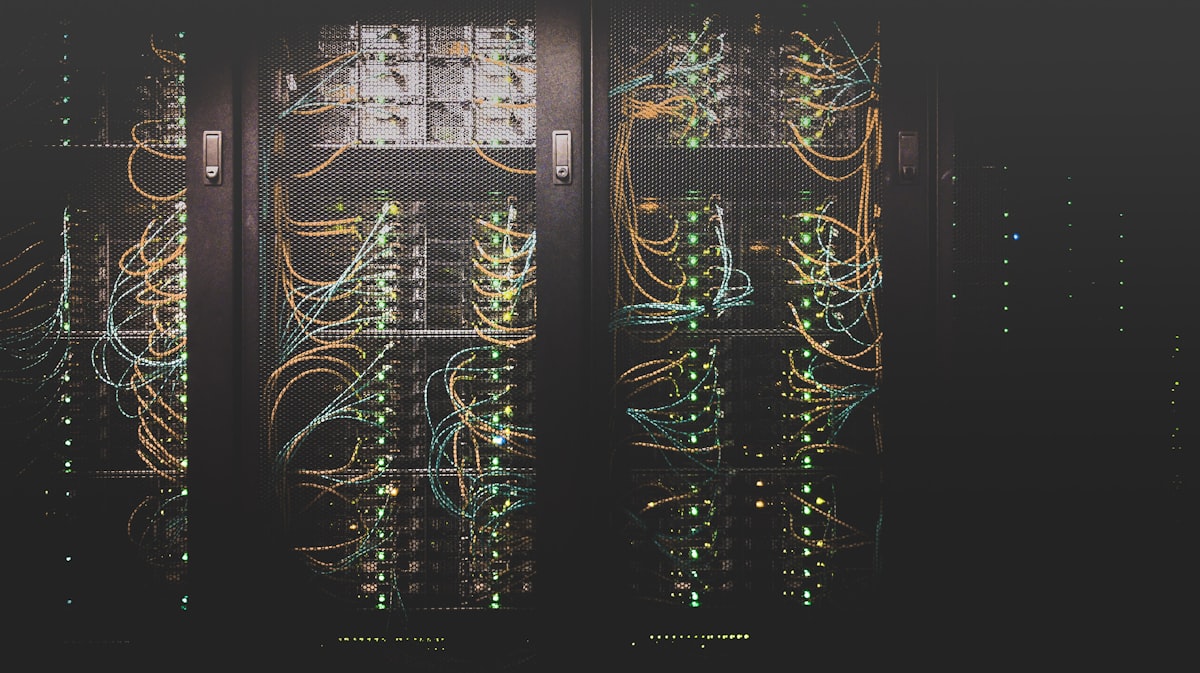
The Pipeline That 'Mostly Works'
Every data team has one. The pipeline that runs every morning at 4 AM, usually completes by 6 AM, and populates the dashboards that the executive team checks by 9 AM. It works. Most of the time. When it doesn't, someone notices by mid-morning, runs a manual fix, and the numbers appear by lunch.
This scenario sounds manageable. Maybe even normal. And that's precisely the problem.
'Almost reliable' is the most expensive state a data pipeline can exist in. It's not broken enough to demand immediate investment, but not robust enough to trust for anything beyond descriptive reporting. It sits in a dangerous middle ground where the organization believes it has data infrastructure while actually operating on a foundation of accumulated workarounds.
The most expensive data failure isn't the one that crashes your pipeline at 3 AM. It's the one that silently delivers wrong numbers to a decision-maker who has no reason to question them.
The Five Silent Failures
In our experience building and rebuilding data platforms across industries, the same failure patterns emerge with remarkable consistency. They're rarely dramatic. They're almost always gradual. And they compound in ways that are invisible until the damage is significant.
1. The Excel Export That Never Died
You built a data warehouse. You migrated reporting to Looker or Power BI. You congratulated yourself. But somewhere in finance, an analyst still downloads a CSV every Tuesday, enriches it with manually maintained lookup tables in a spreadsheet, and emails the result to three VPs who consider it the 'real' source of truth.
This isn't an edge case. In a 2025 survey by Atlan, 67% of data teams reported that critical business processes still depend on manual data exports from their warehouse, exports that bypass every governance, quality, and lineage control the team has built. The warehouse is the system of record in theory. Excel is the system of record in practice.

2. KPI Drift: When Definitions Silently Diverge
What counts as a 'customer'? Is it anyone with an account, anyone who's made a purchase, or anyone who's been active in the last 90 days? In most organizations, the answer depends on which team you ask. Marketing, sales, finance, and product each have subtly different definitions, and each has a pipeline that implements their version.
KPI drift is the slow divergence of metric definitions across an organization. It starts innocuously, a filter added here, a join condition modified there, and ends with the CEO seeing three different revenue numbers from three different teams, none of which match the general ledger. The ensuing 'data reconciliation' exercise consumes weeks of analyst time and erodes trust in the entire data function.
The technical root cause is almost always the absence of a semantic layer or data contract framework. When metric definitions live in dashboard-level SQL rather than in a centralized, version-controlled model, drift is inevitable.
3. The Manual Patchwork: Scripts That Hold Everything Together
Open the deployment history of any 'almost reliable' data platform and you'll find a graveyard of hotfixes. A Python script that retries a failed API call three times then sends a Slack message. A cron job on someone's laptop that backfills a dimension table. A stored procedure that 'cleans up' data quality issues by silently dropping rows that don't conform.
Each of these fixes was reasonable in isolation. Together, they form a Rube Goldberg machine of interdependent workarounds that no single person fully understands. The original architect left eighteen months ago. The documentation, if it exists, describes a system that no longer matches reality.
Technical debt in data pipelines doesn't announce itself. It accumulates silently until a critical failure forces a reckoning, usually at the worst possible time, during a board meeting or regulatory audit.
4. No Data Lineage: The Blind Spot You Can't Afford
When a number on an executive dashboard looks wrong, how long does it take your team to trace it back to its source? In organizations without data lineage, the answer is typically measured in days, not minutes. An analyst has to manually walk backward through transformations, joins, and source tables, often across multiple tools and platforms, to identify where the data originated and where it might have gone wrong.
Data lineage isn't a luxury feature for enterprises with regulatory requirements. It's foundational infrastructure that every data team needs. Without it, debugging is archaeology. Impact analysis for schema changes is guesswork. And when a source system changes its API without warning, which happens constantly, the blast radius is unknown until things start breaking.
Modern lineage tools like Atlan, Monte Carlo, and dbt's built-in lineage provide this visibility. The investment is modest compared to the cost of operating blind.
5. No Monitoring Discipline: The Dashboard for Your Dashboards
Here's the irony that every data engineer appreciates: organizations invest heavily in monitoring their applications, uptime, latency, error rates, the full observability stack, but apply almost none of that discipline to the data pipelines that feed their most critical business decisions.
Data observability means knowing, at all times: Are the pipelines running? Is the data fresh? Does the data conform to expected distributions? Are there anomalies in volume, schema, or values? Has the data arrived within SLA?
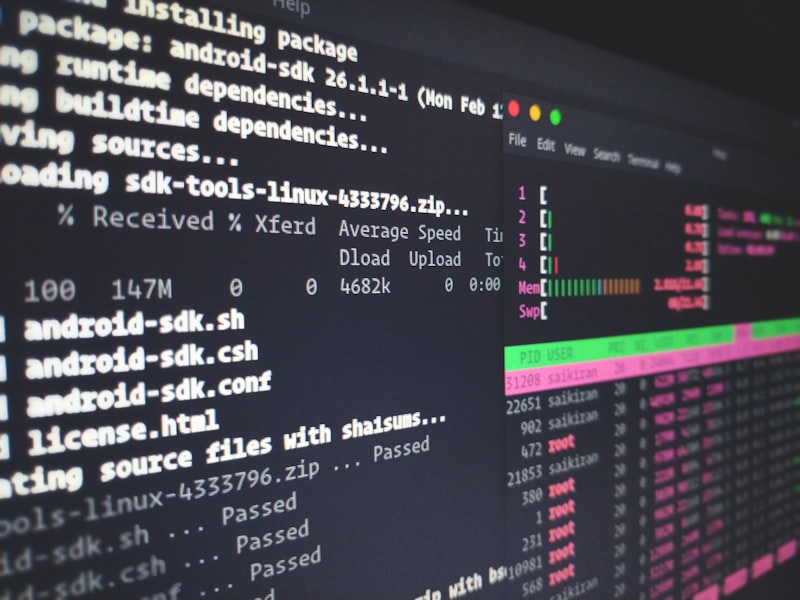
Without these controls, failures are detected by end users, the CFO who notices the revenue number is from yesterday, the product manager whose A/B test results look suspiciously flat. By the time a human catches it, the damage is done: decisions have been made on stale or incorrect data.
DevOps for Data: The Paradigm Shift
Software engineering solved these problems two decades ago. Version control. Automated testing. CI/CD pipelines. Monitoring and alerting. Incident management. The DevOps revolution transformed application development from an artisanal craft into an engineering discipline.
Data engineering is undergoing the same transformation, but most organizations are still in the early innings. The principles are identical:
- ●Version control everything: Not just code, but data models, transformation logic, schema definitions, and metric specifications. dbt has made this the standard for analytics engineering, but the principle extends to orchestration, ingestion, and governance.
- ●Test data, not just code: Unit tests for transformations. Data quality checks at ingestion. Anomaly detection in production. Contract testing between data producers and consumers. The data warehouse should have a test suite as comprehensive as any application.
- ●Automate deployment and rollback: Schema migrations, model changes, and pipeline configurations should deploy through CI/CD, not through manual execution of SQL scripts in production. And when something goes wrong, rolling back should be a one-click operation.
- ●Monitor proactively, not reactively: Data observability platforms should alert on freshness, volume, distribution, and schema changes before users notice. SLAs should be defined, tracked, and reported with the same rigor as application uptime.
- ●Treat incidents as learning opportunities: When a data quality issue reaches production, conduct a blameless post-mortem. Document the root cause. Implement preventive controls. Build institutional knowledge.
The Real Cost: A Quantitative View
Let's put numbers to the problem. A mid-market company with 50 people who regularly consume data from a central warehouse. Conservative estimates:
- ●Data team time spent on reactive firefighting: 30-40% of total capacity. For a 10-person data team averaging $150K loaded cost, that's $450K-$600K annually spent on triage rather than value creation.
- ●Decision latency from stale or questioned data: Impossible to quantify precisely, but when a pricing decision is delayed by two weeks because the underlying data is being 'validated,' the opportunity cost is real.
- ●Trust deficit: Once an executive encounters wrong data, they discount everything from the data team for months. The investment in credibility recovery far exceeds the investment in prevention.
- ●Regulatory risk: In financial services and healthcare, data quality failures can trigger compliance violations. The fines are secondary to the remediation costs and operational disruption.
The cheapest pipeline failure is the one you prevent. The most expensive is the one you don't notice for six months.
Building Reliable by Default
The path from 'almost reliable' to genuinely robust isn't a single initiative, it's a set of engineering practices that compound over time. At InclinedPlane, we approach this as a maturity journey with clear milestones:
Foundation: Observable and Tested
Implement data quality checks at every boundary, ingestion, transformation, and consumption. Deploy a monitoring layer that tracks freshness, volume, and schema stability. Establish SLAs for every critical pipeline.
Intermediate: Contracted and Governed
Introduce data contracts between producers and consumers. Centralize metric definitions in a semantic layer. Implement column-level lineage. Version-control all transformations with automated testing in CI.
Advanced: Self-Healing and Proactive
Build automated remediation for common failure modes. Implement anomaly detection that catches distribution shifts before they reach consumers. Create feedback loops where data quality issues automatically trigger upstream fixes.
The Bottom Line
If your data pipelines are 'almost reliable,' they're actively costing you, in team productivity, decision quality, stakeholder trust, and competitive agility. The silent nature of these failures makes them easy to deprioritize, but the cumulative cost is substantial.
The good news: the playbook exists. DevOps for Data isn't theoretical, it's a proven set of engineering practices with mature tooling and clear ROI. The organizations that adopt these practices don't just fix their data quality problems. They unlock the ability to build prediction, automation, and decision systems on a foundation they can actually trust.
At InclinedPlane, we specialize in taking organizations from 'almost reliable' to production-grade. Because in the era of AI-driven decision-making, 'good enough' infrastructure is a liability masquerading as an asset.
Image Credits
- Taylor Vick , Dense server room with rows of illuminated servers and network cables creating intricate patterns of light · via Unsplash
- Shubham Dhage , Abstract network visualization with glowing nodes and connections representing data flow patterns · via Unsplash
- Markus Spiske , Terminal screen showing lines of code with data processing commands in a dark environment · via Unsplash